
Migration in project cycle management
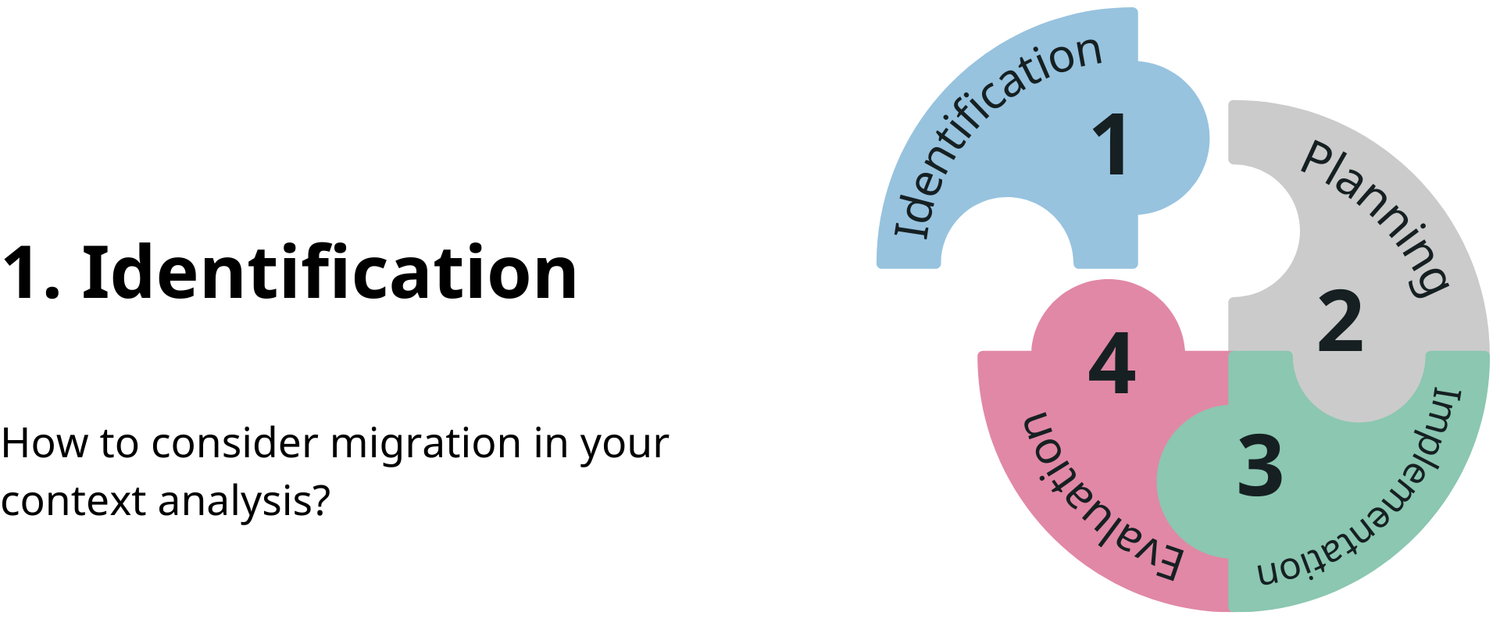
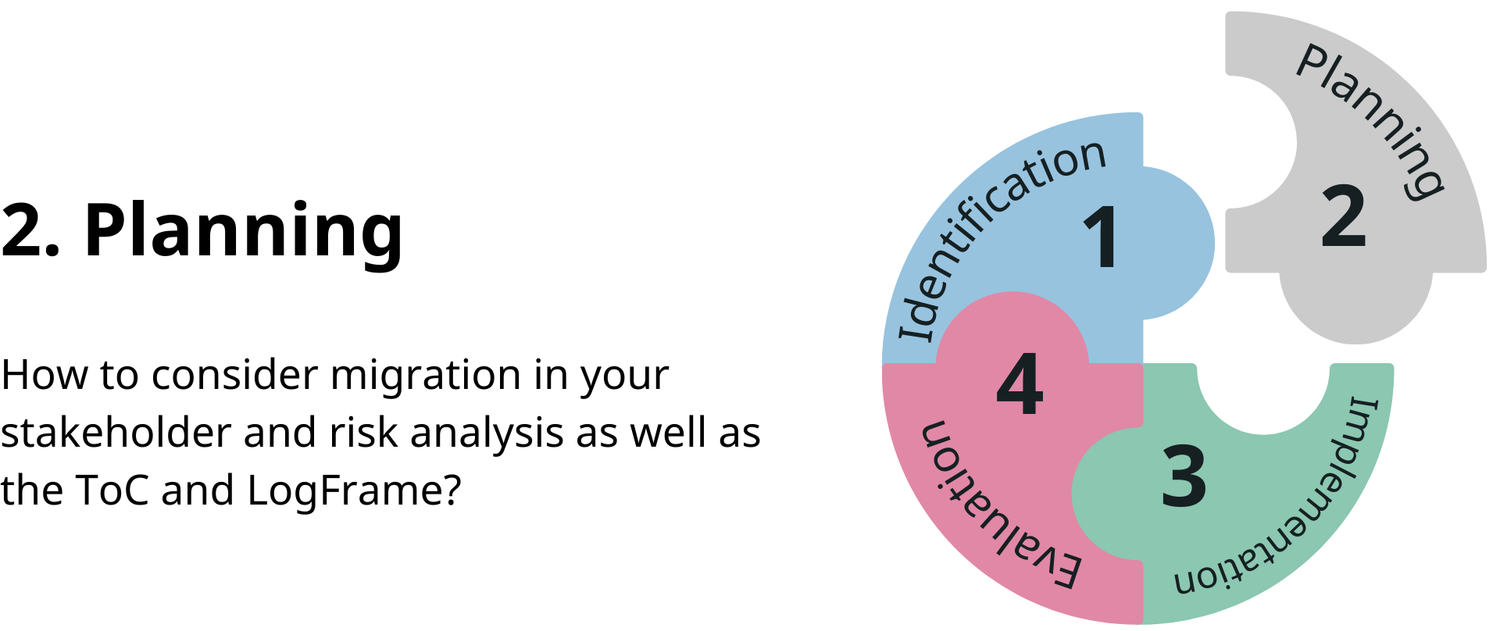
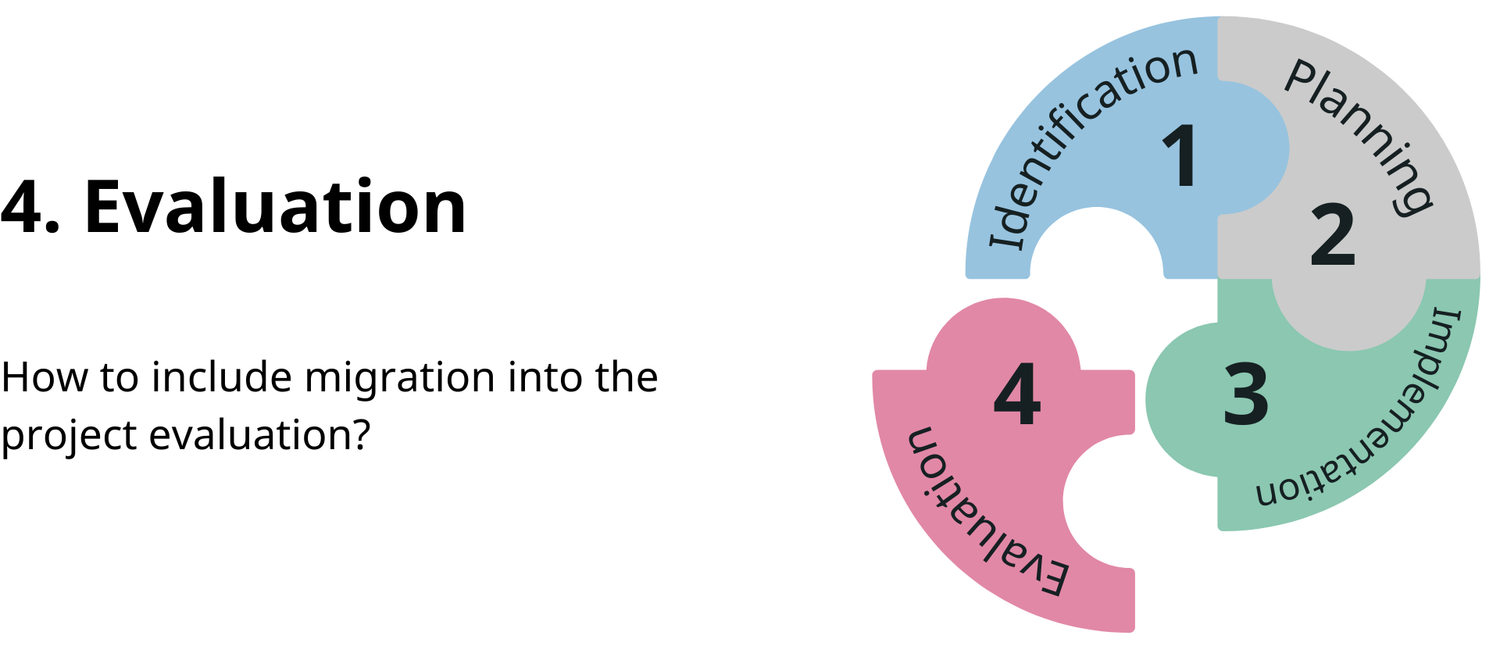
Checklist for including migration considerations into PCM with guiding questions for the different phases.
.png?auto=format)
Context analysis
- What are the migration patterns in the given context?
- What are the drivers in the country of origin as well as in the country of destination that lead to a decision to migrate?
- What is the profile of the migrants, including forcibly displaced persons, entering, residing or returning to a country (age, gender, status, origin, education and skill level, duration)?
- What are the challenges and opportunities related to migration in a given context? Are remittances an important percentage of the GDP?
- Does the migration/displacement situation have implications for migrants’ needs and vulnerabilities as well as for protection risks, including their families and host communities and/or the context/conflict transformation and development dynamics?
- How is migration/forced displacement managed at the national and local level?
- Is there a comprehensive national migration policy in place? Do the legal frameworks and sectoral policies consider migrants?
- What are the capacities and the quality of public service delivery?
- Have policies been developed to promote the rights and empowerment of migrants of all genders, ages, nationalities and migration status?
- Can migrants participate in decision-making on matters affecting their livelihood and do they have access to the relevant information?
- Are migrants’ rights respected and do they have access to justice, remedies in case of violations? Have migrants and forcibly displaced persons equal rights to education and health?
- What are the links with the private sector?
- Do many migrants work in and contribute to the private sector?
- Do diaspora remittances benefit the private sector?
- Does engaging with employers promote migrants’ integration and returning migrants’ reintegration as well as resolve challenges related to migrant rights and decent working conditions?
- What are gender specific aspects to be considered in migration?
- How does migration affect gender roles and relations?
- Is it leading to an increased empowerment of women? Does it create tensions between men and women due to changed gender roles?
.png?auto=format)
Stakeholder analysis
- Migrants and forcibly displaced persons of all ages and gender such as IDPs, refugees, climate and environmental migrants.
- Diaspora: What are the economic and social resources and skills of the Diaspora? Is the Diaspora willing to invest in their country of origin?
- Istitutions in charge of migration governance, development planning, sector policies, and national, local dialogue.
- Sub-national governments, including states, regional authorities, municipalities, city authorities, as these authorities play a particularly important role in the (re)integration of migrants.
- Civil society, including trade unions, academic institutions (for data and evidence), faith-based organisations (for service provision to vulnerable migrants), and media (shaping public perceptions on migration).
- Private sector including industry and employer associations: Employers play a critical role in promoting migrant (re) integration, migrant contributions to economic development, as well as resolving challenges related to migrant rights, such as working conditions for labour migrants.
- International organisations and other International Cooperation agencies including the UN Network on Migration.
The migration related interests should be analysed for each stakeholder. Who are the spoilers or enablers of an engagement in migration?
Theory of Change (ToC) and Logical Framework Approach
- What is the migration context in which the programme takes place? How are migrants affected by the intervention?
- Are migrants among the target population of the intervention?
- If yes: What is the change the intervention aims to bring to migrants? How is the programme aiming to achieve this change? To what extent are migrants included in the results chain/Log Frame of the programme at impact, outcome and output level? Does the Log Frame include migration-related indicators (see also monitoring and reporting)?
Risk analysis
- Migrants are unable to benefit from the intervention
- Migrants are «left behind», limiting the intervention’s impact. Unequal treatment between migrants and citizens can negatively impact the community cohesion.
- Mitigation measures: Amend programme to include migrants of all genders and ages. Include all migration stakeholders in programme development and steering.
- Intervention activities negatively affect migrants
- Increased vulnerability of migrants. The development effects of migration are constrained.
- Mitigation measures: Discuss problems with all concerned stakeholders and develop mitigation measures. Consider separate targeted support for migrants.
- Opposition to migrants’ inclusion by partner countries
- Tensions between migrants and host communities. Community cohesion may be disrupted.
- Mitigation measures: Continue to advocate for migrant inclusion in dialogue with stakeholders. • Foster a migrant-inclusive multi-stakeholder dialogue.
- Migration patterns change as a result of policy, conflict, environment, natural disaster
- The project results cannot be achieved. New vulnerabilities emerge which need to be addressed. Social/community cohesion can break down. New vulerabilities emerge which need to be addressed. Socail/community cohesion can break down.
- Mitigation measures: Amend the project through discussions with key stakeholders to address vulnerabilities/challenges arising from new migration patterns. Regular monitoring of population movements.
- Migrants are unable to benefit from the intervention
.png?auto=format)
Monitoring and reporting
Indicators
- Use the migration-related Aggregated Reference Indicators and Thematic Reference Indicators for the development of your project and Swiss Cooperation or global programme results frameworks.
- If you mainstream migration in other sector interventions and use other thematic ARIs and TRIs, it is recommended to choose migrants and forcibly displaced people as LNOB category.
Policy Marker and Sectors
- Please use the SAP Policy Marker and Sectors related to migration.
.png?auto=format)
Project evaluation
Relevance
- Did the intervention consider migrants’ needs or constraints?
- Were the project/programme results aligned with migration-related aspects of development policies and goals (bilateral or multilateral)?
- Was migration considered as a structural factor which could impact the project results?
Effectiveness
- Were the needs, problems and challenges of migrants of different gender and age groups effectively addressed?
- Did the intervention contribute to a comprehensive and protection-sensitive migration management approach?
- How did migration have an effect on the achievement of the results?
Efficiency
- Was there an additional cost of inclusion of migration/migrants?
- Were the results equitably allocated and received for migrant and non-migrant populations?
Related topics

Indicators
Migration-related Aggregated Reference Indicators (ARIs), Thematic Reference Indicators (TRIs) and Context-specific Indicators (CSIs)

SDC Working aid on migration
In order to support International Cooperation actors of the Swiss Federal Administration in the implementation of the priority theme, the SDC Migration and Forced Displacement Network developed a Working Aid in 2021, which is still relevant and of use today.
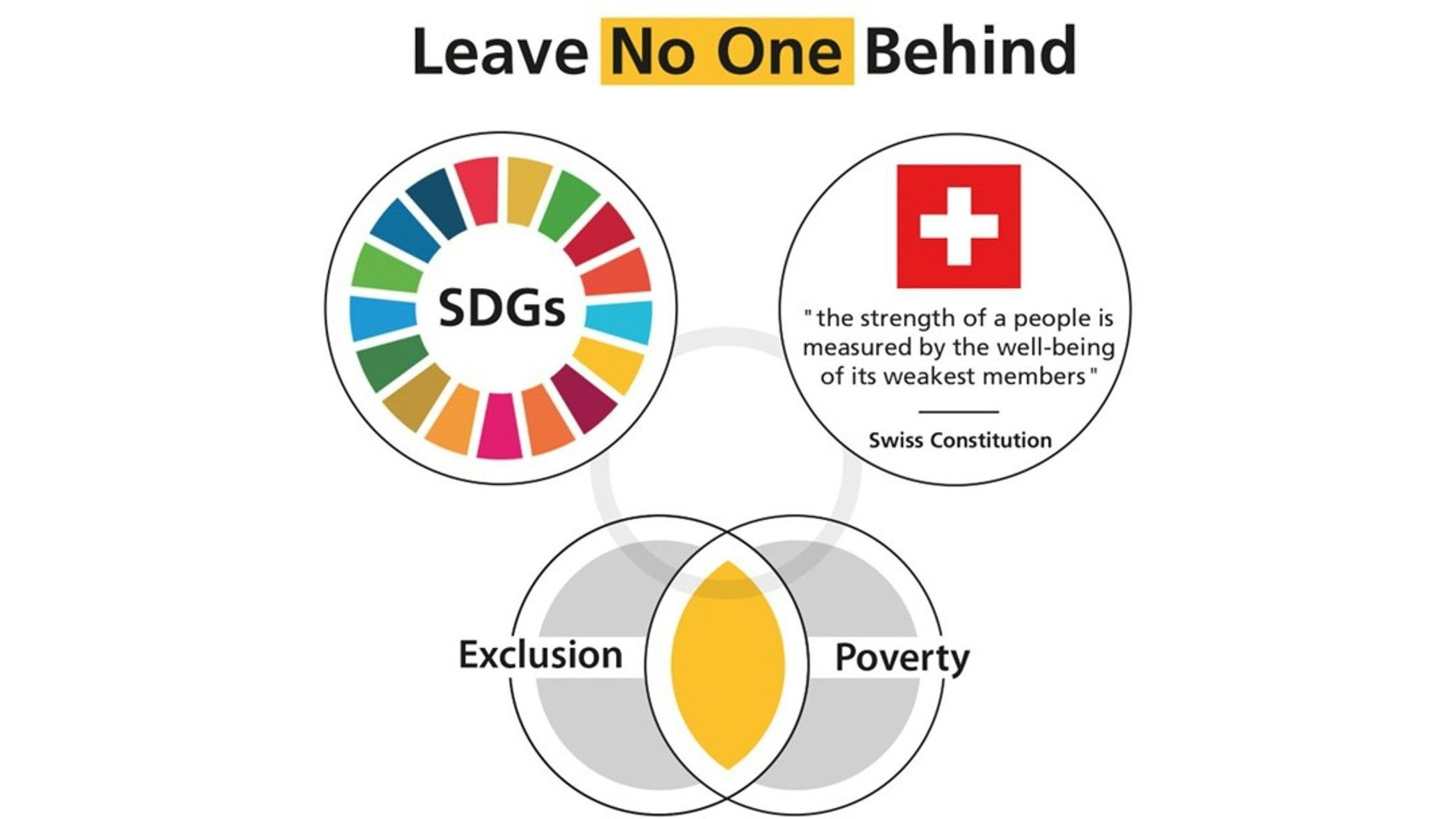
Leave No One Behind (LNOB)
LNOB is a central pledge of the 2030 Agenda, recognising the need to combat poverty and inequalities. Visit the SDC Peace, Governance and Equality (PGE) network to learn about the implementation of the LNOB pledge at SDC and more.