
Safe and Sustainable by Design: graphene as a showcase
St. Gallen, 04.06.2026 — Safe and sustainable from the outset – how exactly would you ensure that? Empa researchers are applying the Safe and Sustainable by Design (SSbD) framework to the 2D material graphene. This is not just a matter of understanding the risks that graphene poses to humans and the environment. The focus is also on the SSbD framework itself and its applicability in practice.
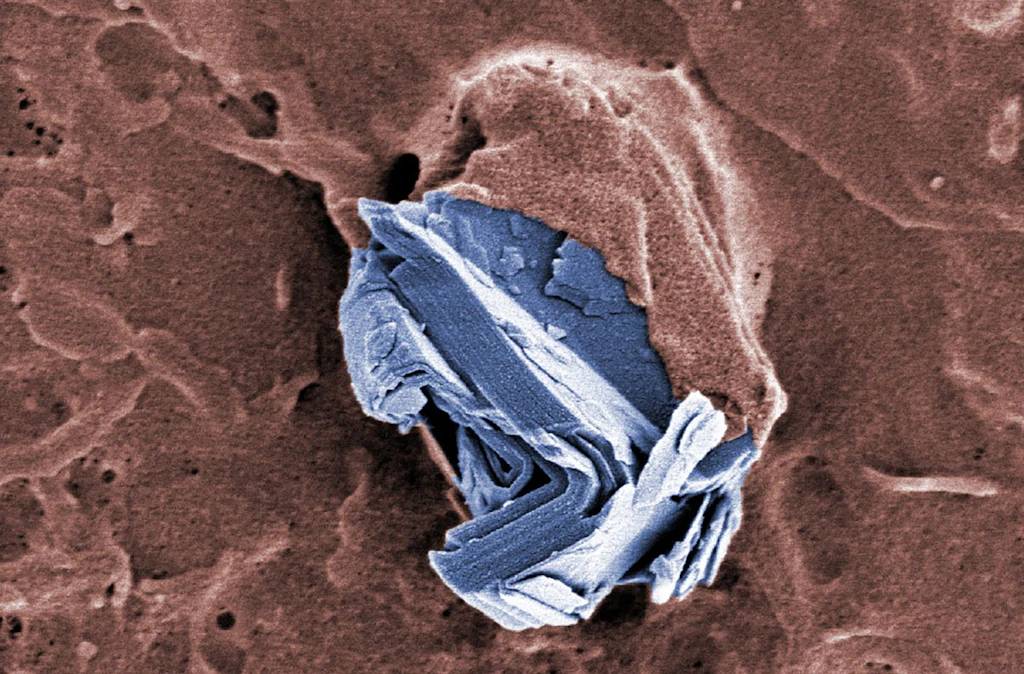
Graphene is a true prodigy of materials science. In this form of carbon, the atoms arrange themselves into two-dimensional layers. This gives graphene advantageous properties: It is electrically conductive, almost transparent, and has high tensile strength. Since its first synthesis in 2004, the material has been the subject of intensive research, also at Empa. Its effects on human health and the environment have been investigated in detail in the EU Graphene Flagship project to which Empa researchers contributed.
Now Empa researchers are going one step further and are applying the Safe and Sustainable by Design (SSbD) principle to this novel material. “Graphene is a good example because there are already many studies and data available on it,” explains Peter Wick, who heads Empa's Nanomaterials in Health laboratory. “We have been working with this material for ten years as part of the Graphene Flagship.”
The fundamental ideas behind the SSbD concept are not new, the researcher continues: The safety and sustainability of graphene were already a central theme in the Flagship project. What is new is the combination of these topics in the SSbD framework, which is intended to enable sustainable and safe innovations in industry.
Accordingly, the Empa researchers were not (only) interested in finding out whether graphene itself is safe and sustainable. “We wanted to use the good availability of data to test the applicability of the SSbD framework and find out where and how it can be further developed and simplified,” explains Empa researcher Fiorella Pitaro from the Technology and Society lab.
One name, many materials
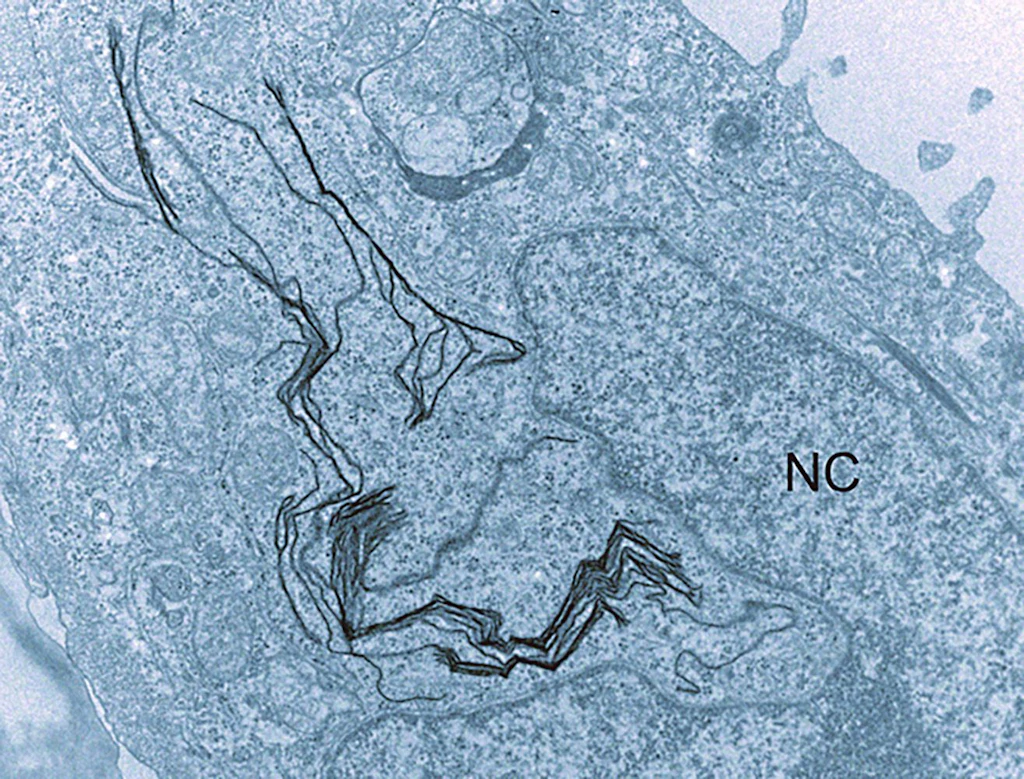
The task is complex: Thanks to intensive research and development over the last two decades, pure graphene has been joined by a whole range of related products, known as graphene-like materials. There is pure graphene, but also graphene oxide, reduced graphene oxide, few-layer graphene and many more. Even these terms are not always clear and can themselves refer to several slightly different materials.
This diversity is a challenge, but also an advantage for the application of SSbD. “We can compare the data for each of these material subclasses and come up with statements about the relationship between the hazard potential of a particular variant and its structure,” explains Wick. “Since they often have similar functionalities, the safest form of graphene can then ideally be used for each application.”
The way by which the material enters the human body is also crucial for making statements about its safety: Is it inhaled or injected directly into the bloodstream as part of a medication? Does it enter our digestive tract via the food chain, or is it applied to the skin? “In order to reliably assess the risk to humans, we need to know how the material is being used,” says Wick. This is because the application determines whether, how, and in what quantities exposure occurs.
Accessible and reliable
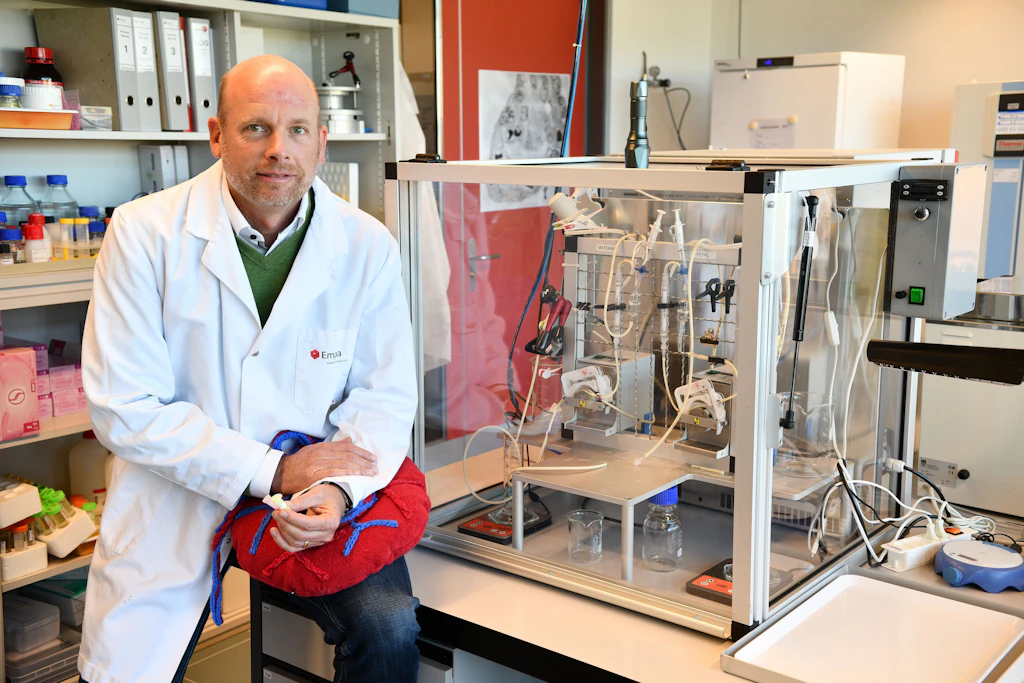
“The tools and models that can be used for assessments in the SSbD framework were developed primarily for chemicals,” says Fiorella Pitaro. Whereas the molecular structure is the main factor determining the properties of chemicals, many more factors come into play with materials: surface properties, particle shape and size, type of processing, and much more. Another goal of the Empa researchers is therefore to further develop the existing SSbD tools so that they can also be applied to materials.
The aim of SSbD is to promote sustainable and safe innovations. “In order for industry, especially SMEs, to be able to use it, the framework needs to become even more accessible and simpler,” says Peter Wick. Nevertheless, the statements it makes about the safety and sustainability of materials and chemicals should be as reliable as possible. Further research is needed to reconcile these conflicting requirements – something that the Empa teams are pursuing in various projects.
When it comes to the safety and sustainability of graphene, experts are cautiously optimistic. In many areas and applications, the material appears to be safer and more sustainable than the carbon-based alternatives used today. However, they caution that this is not a free pass to release it into the environment without restriction. “We don't know everything yet,” says Empa researcher Wick.
Technology Briefing: Safe and Sustainable by Design (SSbD)
On June 25, the Technology Briefing on “Safe and Sustainable by Design” (SSbD) will take place at Empa in Dübendorf. Researchers from Empa and industry partners will provide practical insights and use concrete examples to demonstrate the opportunities SSbD offers for safe and sustainable innovations. The event will be held in German, and is free of charge.
Literature
H Lin, T Buerki-Thurnherr, J Kaur, P Wick, M Pelin, A Tubaro, F Candotto Carniel, M Tretiach, E Flahaut, D Iglesias, E Vázquez, G Cellot, L Ballerini, V Castagnola, F Benfenati, A Armirotti, A Sallustrau, F Taran, M Keck, C Bussy, S Vranic, K Kostarelos, M Connolly, JM Navas, F Mouchet, L Gauthier, J Baker, B Suarez-Merino, T Kanerva, M Prato, B Fadeel, A Bianco: Environmental and Health Impacts of Graphene and Other Two-Dimensional Materials: A Graphene Flagship Perspective; ACS Nano (2024); doi.org/10.1021/acsnano.3c09699
F Pitaro, S Seeger, B Nowack: The safe and sustainable by design framework applied to graphene-based materials; Environment International (2025); doi: 10.1016/j.envint.2025.109345
Further information
Prof. Dr. Peter Wick
Empa, Nanomaterials in Health
Phone +41 58 765 76 84
peter.wick@empa.ch
Fiorella Pitaro
Empa, Technology and Society
Phone +41 58 765 70 14
fiorella.pitaro@empa.ch
Prof. Dr. Bernd Nowack
Empa, Technology and Society
Phone +41 58 765 76 92
bernd.nowack@empa.ch