
Migration in Switzerland's International Cooperation
As a small, highly globalized country, Switzerland has a strong interest in an international migration governance system that not only addresses the risks of unsafe migration and forced displacement but also maximizes the benefits of regular migration for the economy.
Switzerland's approach
Switzerland’s foreign policy on migration is characterized by a partnership approach with countries of origin, transit and destination and a balanced approach to migration considering challenges and opportunities. This makes Switzerland a credible and principled partner in the field. It strives to put the migrants’ voice, agency, and rights at the centre of its initiatives.
Switzerland's International Cooperation Instruments and the State Secretariat for Migration coordinate their action through the Interdepartmental Structure for International Cooperation on Migration to ensure policy coherence.
What does the Swiss International Cooperation do in the field of migration?
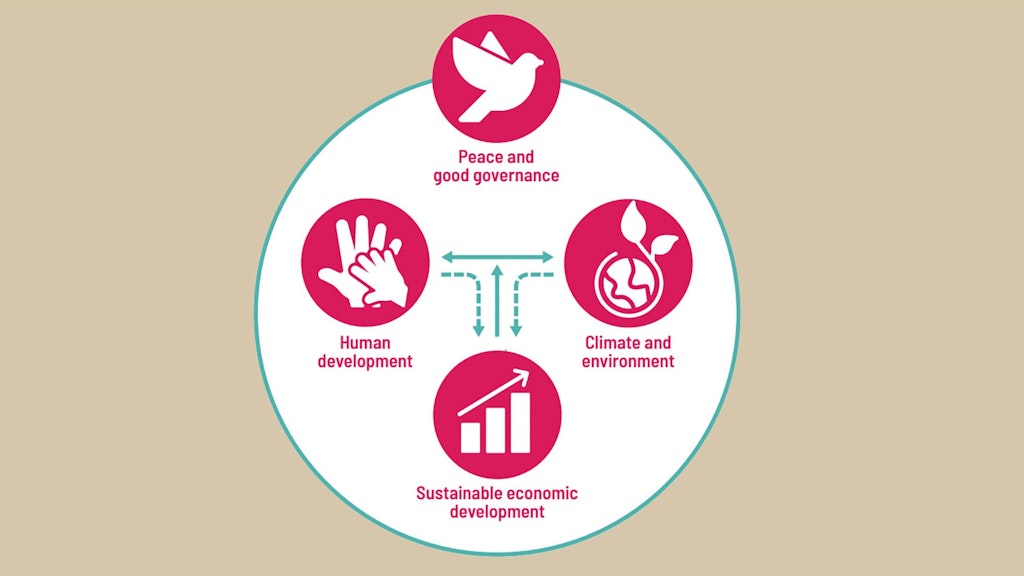
As set out in the Foreign Policy Strategy 2024–27 and the Strategy on International Cooperation 2025–28, migration is a priority topic for Switzerland’s foreign policy with a dedicated sub-objective 1, as part the strategy's first main objective on human development:
- Dedicated sub-objective 1: Creating conditions and prospects for safe and regular migration, improve integration and protection, and strengthen the contribution of migration to sustainable development.
All International Cooperation instruments contribute to migration related outcomes
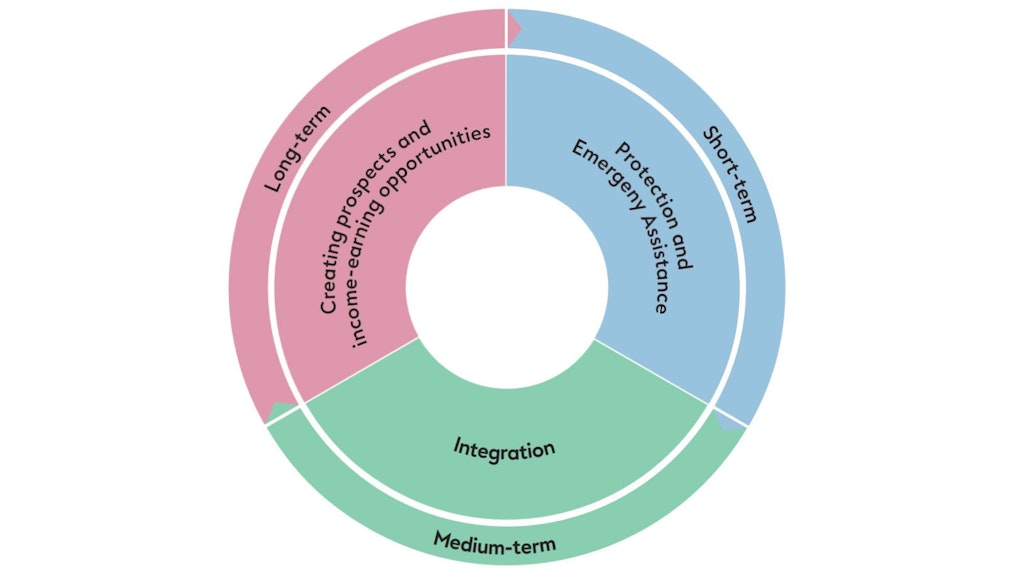
- In the short term, the international cooperation improves the living conditions of displaced persons and protects the rights of refugees in host countries.
- In the medium term, it aims to create opportunities and find durable solutions for the socio-economic integration of migrants and displaced persons in partner countries.
- In the long term, the international cooperation addresses the root causes of irregular and forced migration, by preventing conflicts, mitigating the effects of climate change, protecting displacement-affected communities in their region of origin and by creating sustainable economic prospects, including through safe and regular labour migration.
On the Parliament’s request, a flexible fund wallet was introduced in 2021 to support development programs outside of Switzerland’s international cooperation priority countries to support migration dialogues with countries where Switzerland has domestic migration interests. Countries are selected based on the proposal of the State Secretariat for Migration (SEM) and agreed within the framework of the ICM Structure.
Interactive project map
How to navigate
- You can search by sector, project or country. For example,
- Choose a sector.
- Under "Active Projects" a list of sector specific projects is generated.
- Click the link to the right of the project name. A new browser tab will open a new page with the project description.
How does SDC define the term «migrant»?
The SDC uses migrant as an overarching term that includes all categories of people migrating or being displaced. This is in line with the SDC’s inclusive approach that takes into account the mixed nature of migration.
Related topics
Switzerland’s international cooperation strategy 2025-2028
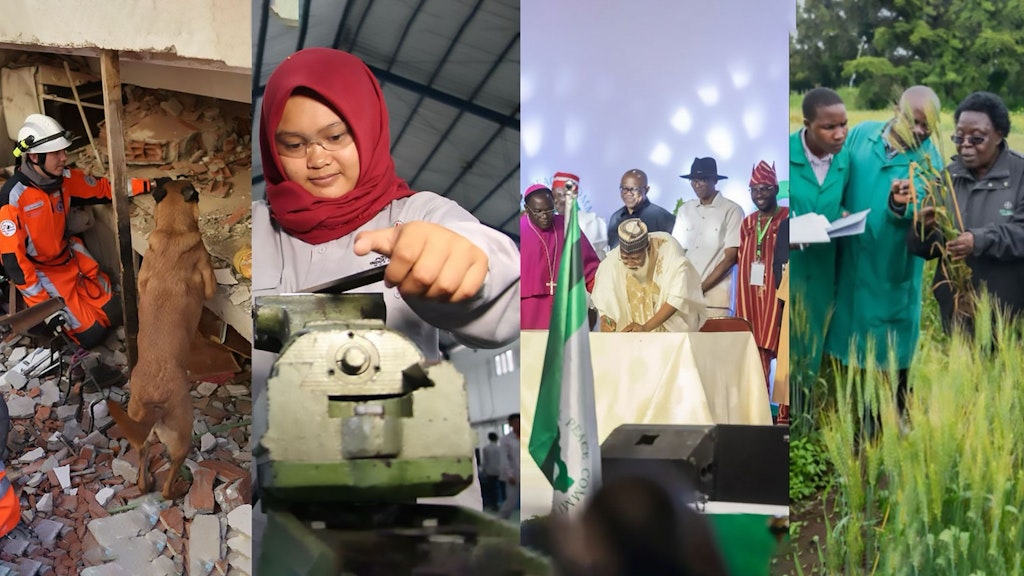
The strategy adopted by Parliament in December 2024 sets out Switzerland’s priorities for development and economic cooperation, humanitarian aid and the promotion of peace and human rights.

Foreign Policy Strategy 2024–2027
How is Switzerland positioning itself in this context? The Foreign Policy Strategy 2024–27 answers this question.

Swiss Foreign Policy on Migration
Presented by the State Secretariat for Migration SEM.
Contact us
Federal Department of Foreign Affairs (FDFA)
Eichenweg 5
Switzerland - 3003 Bern